Acacia nectar flow
The bloom lasts about ten days, so acacia honey is a small batch every year.
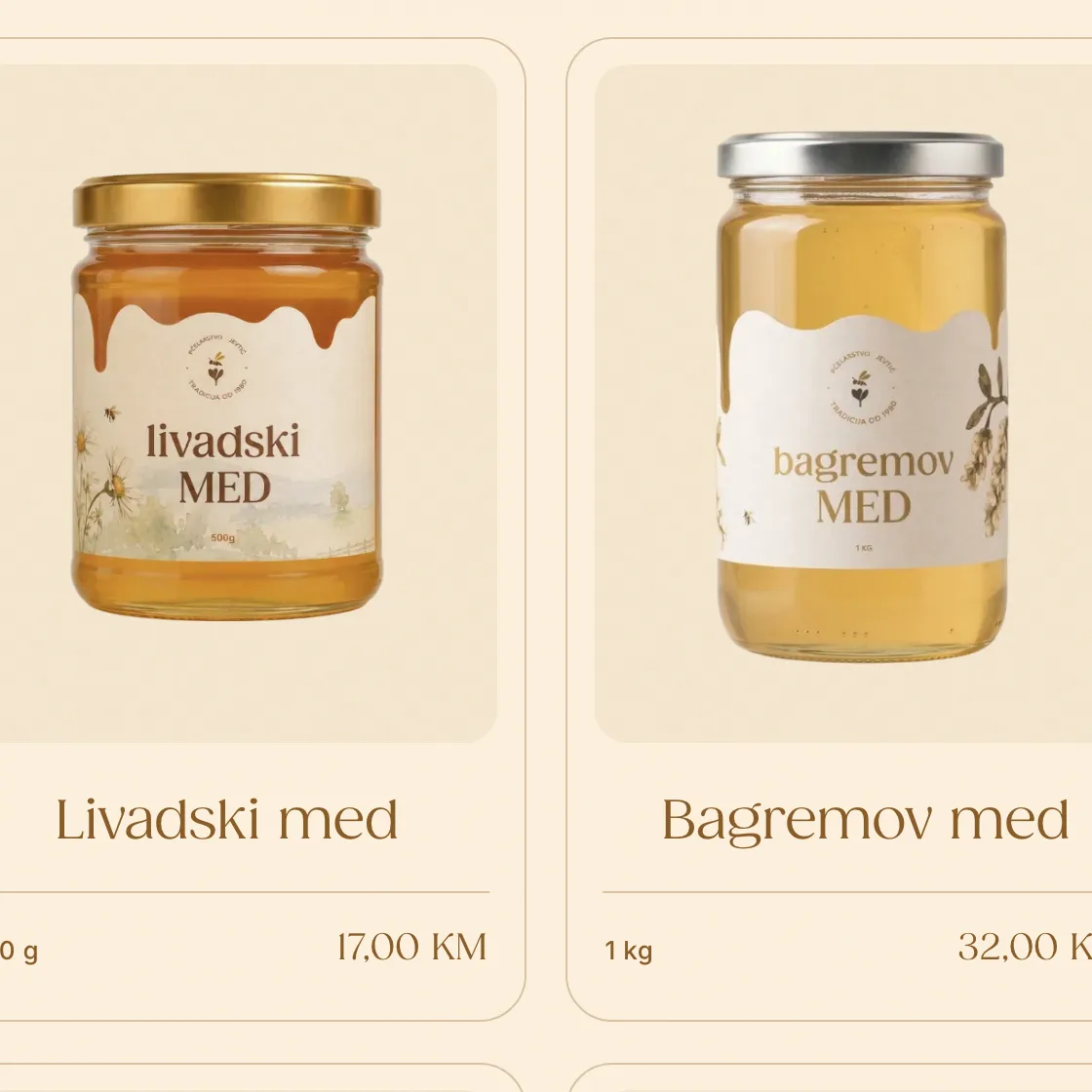
A family apiary from Mračaj near Prnjavor got one language from jar to screen. The mark, labels and declarations for meadow and acacia honey, then a website and shop where honey is bought straight from the apiary.
In pilot: the shop is live and being refined.
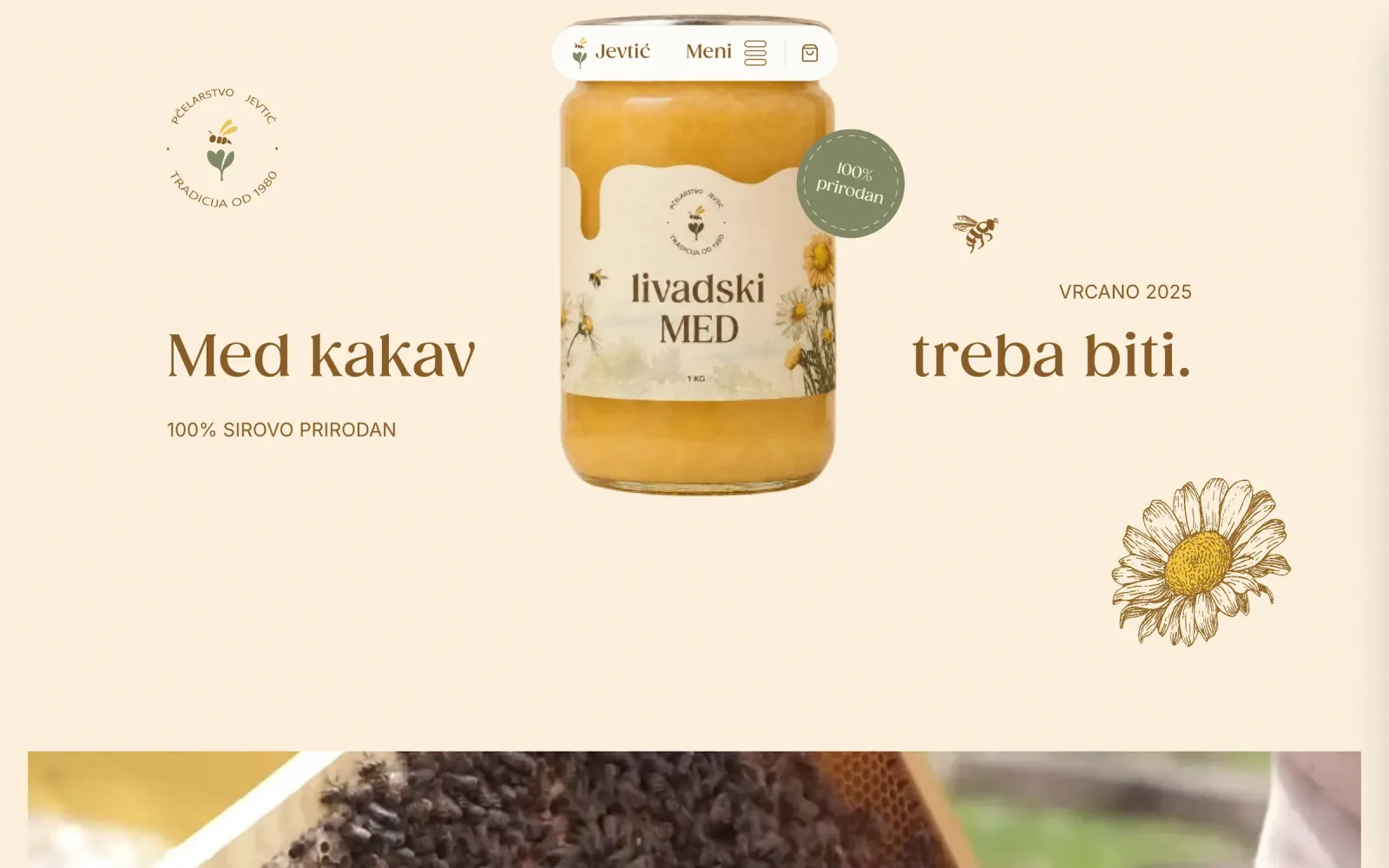
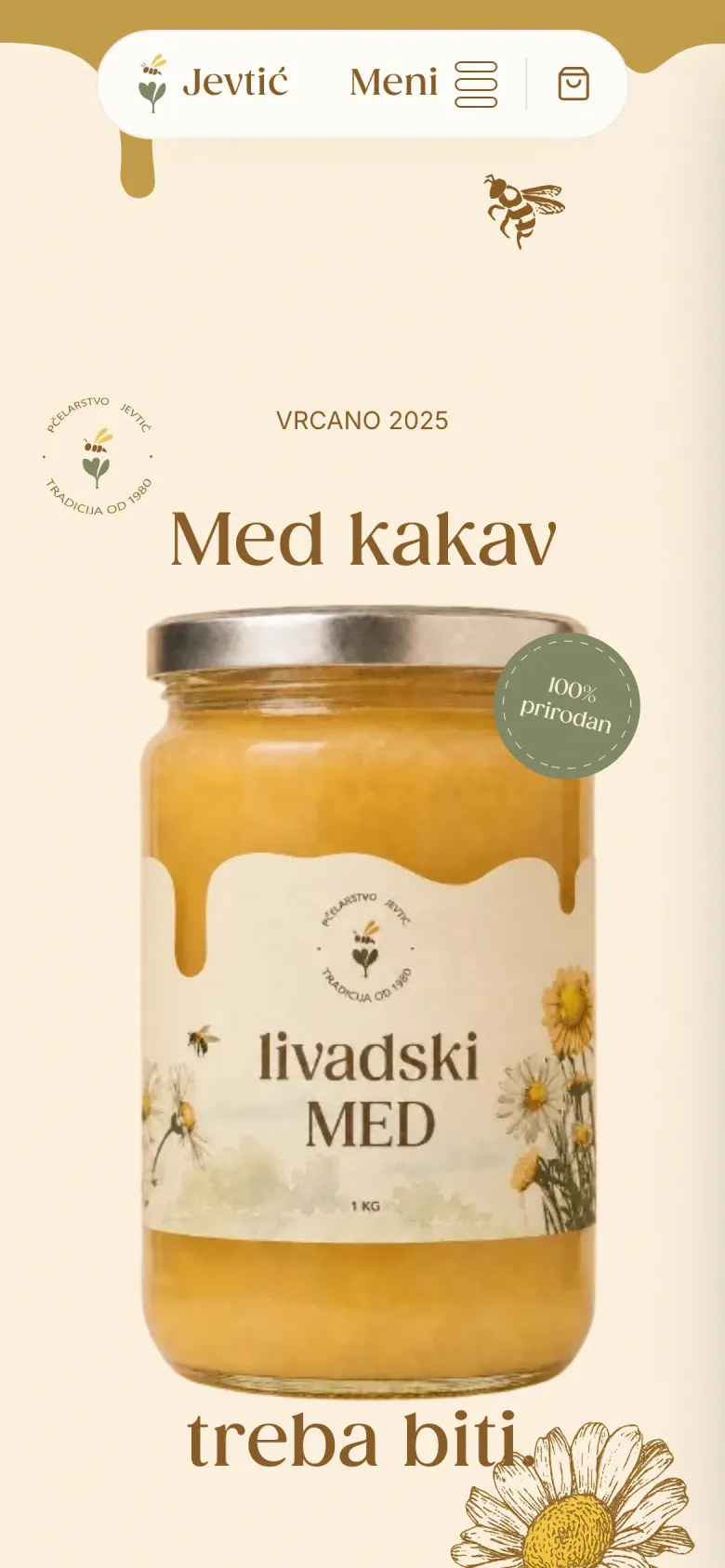
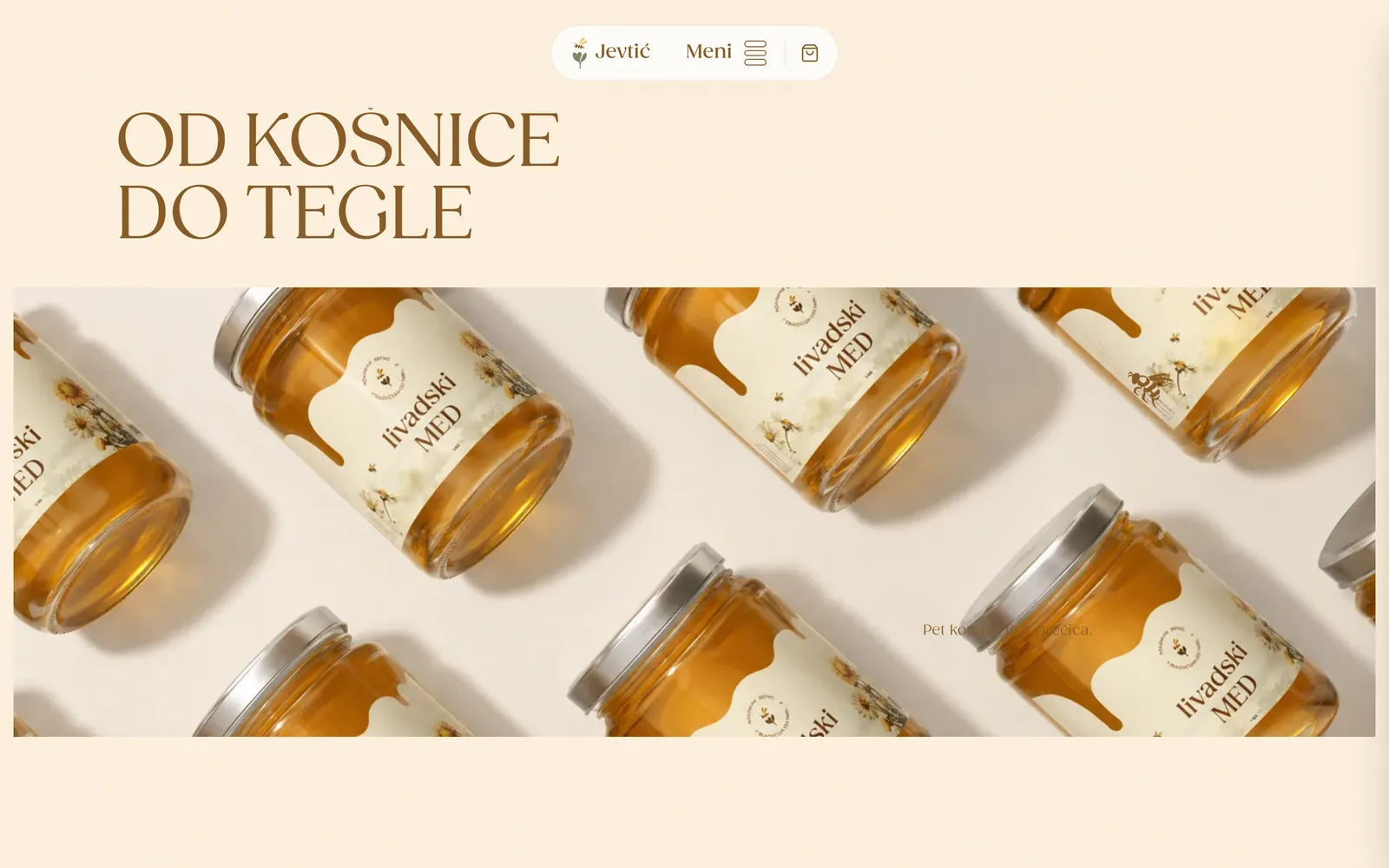
Local honey is often sold in an unlabelled jar, so buyers remember the neighbour, not the product. Here the mark came first, then a label carrying the variety and weight, and only then the screen. The same flower, the same drop of honey across the label and the same “Tradition since 1980” seal appear on both the jar and the website.
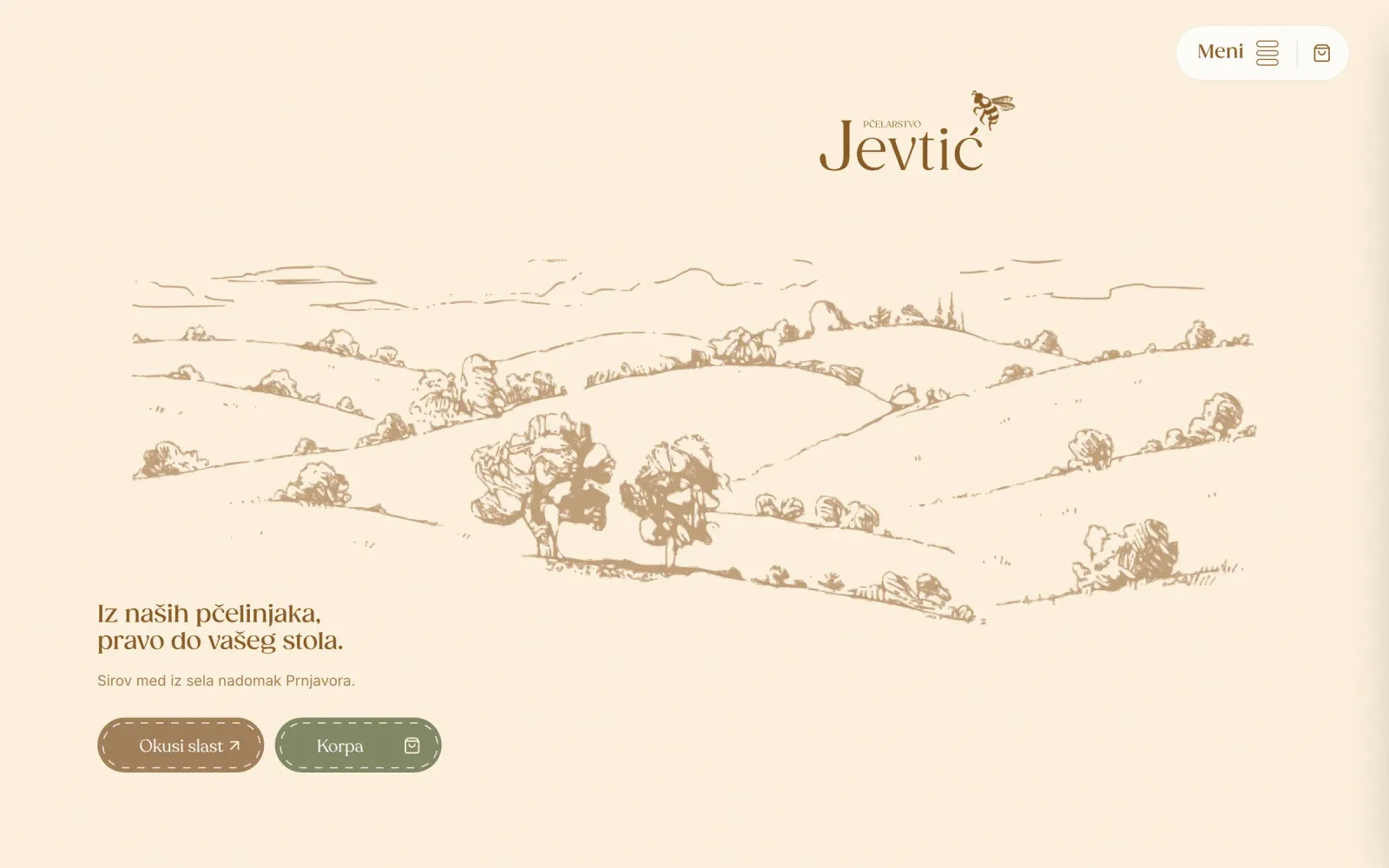
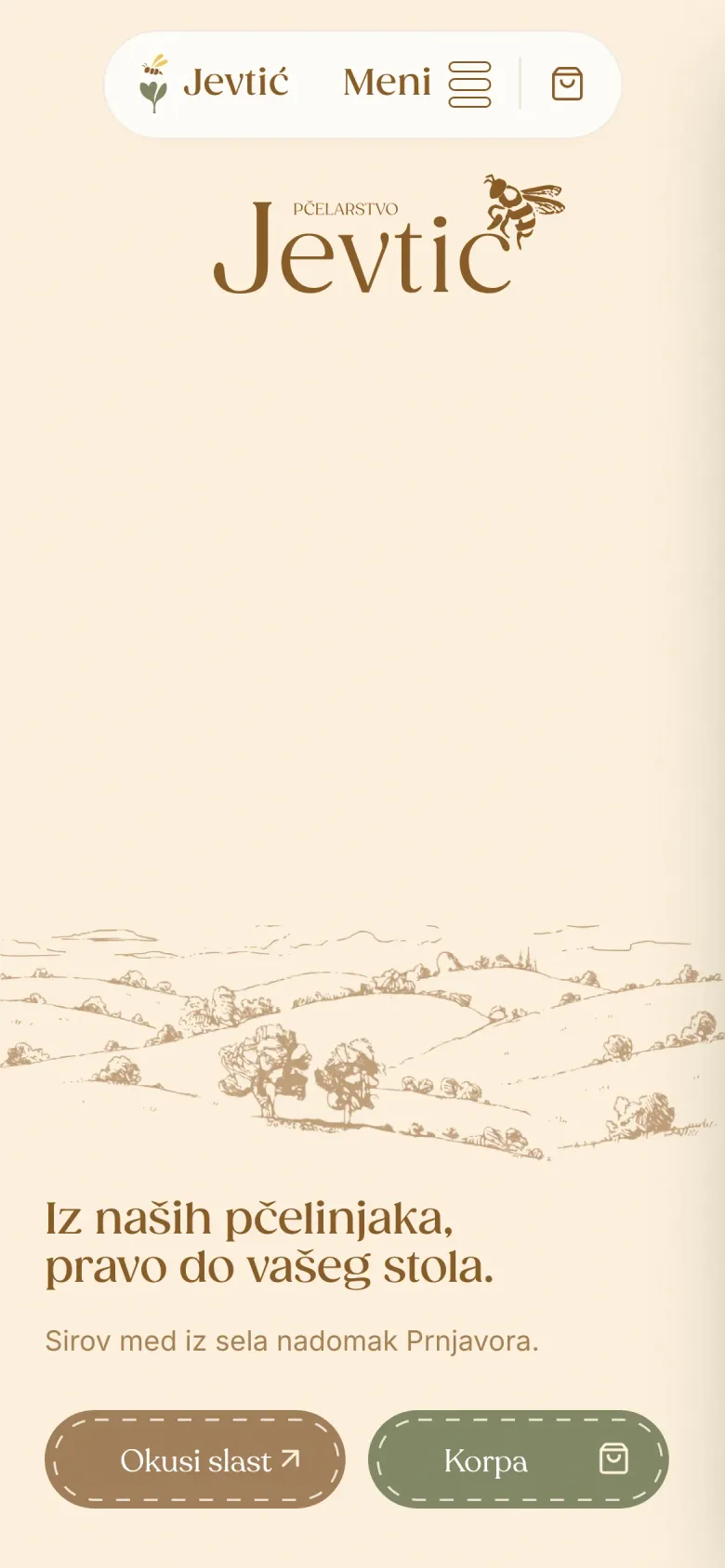
The website speaks the language of the landscape the honey comes from: the meadows around Mračaj, the apiary coordinates and hand-drawn hills. Each variety lists its taste, colour and forage, so customers choose honey as they would at the market, except the beekeeper doesn't have to explain everything from scratch every time.
The process page follows the beekeeping year month by month, from preparing the apiary in March to the jar on the table a year later. It's written the way a beekeeper works: acacia blooms for about ten days, meadow honey changes from year to year, and each forage is extracted separately.
The bloom lasts about ten days, so acacia honey is a small batch every year.
Chamomile, dandelion, clover and linden, which is why meadow honey is never the same two years running.
Capped comb only, no heating, each forage harvested separately.
By hand, into glass, with the batch number and forage on the label.
Meadow and acacia honey in 1 kg and 500 g jars, propolis, immuno mix, bee bread and honeycomb, with prices in KM and a cart on the same page. For larger quantities, gift packs and seasonal batches, customers write directly to the beekeeper.
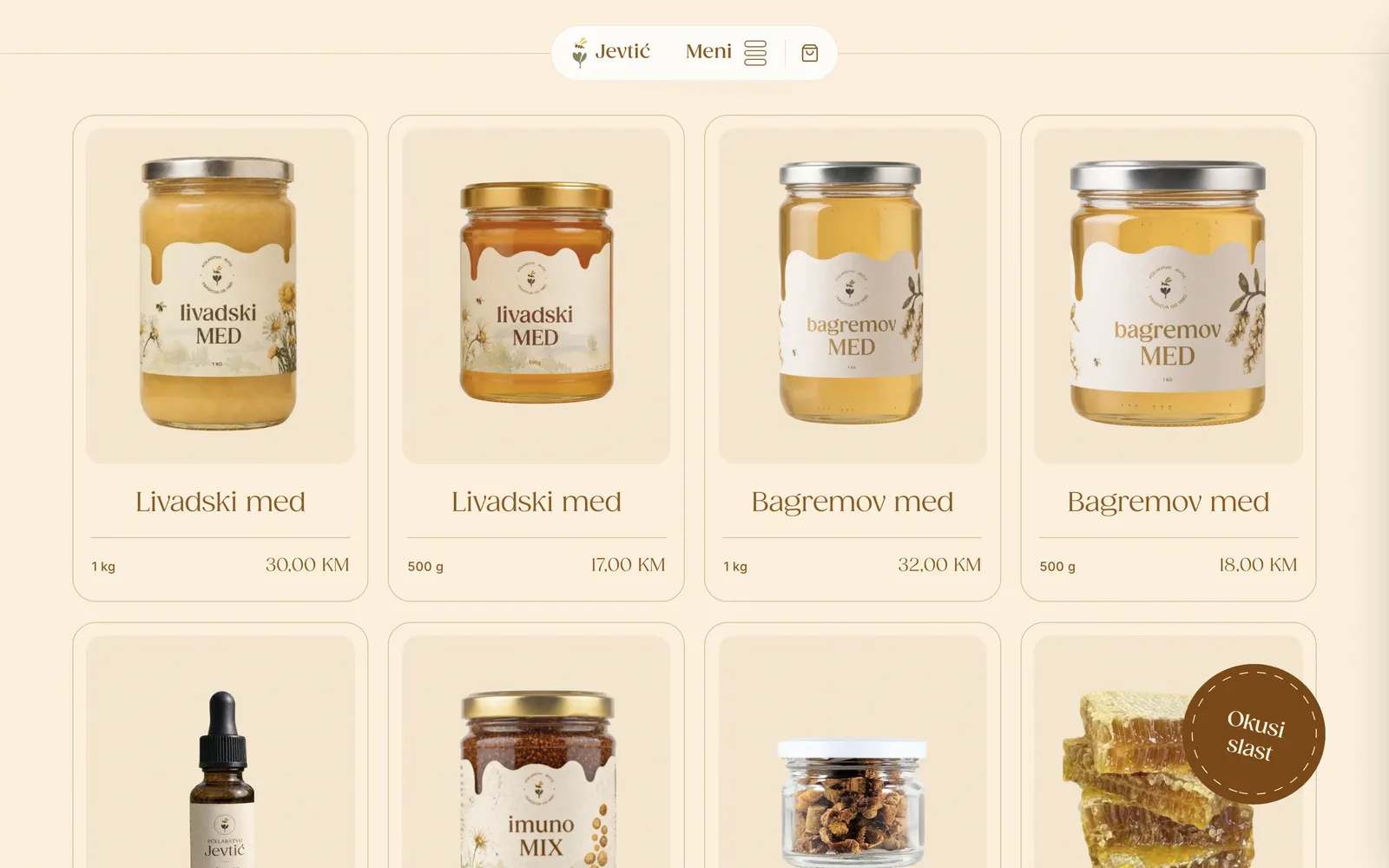
What's on the website
As stated on the website and the jars.